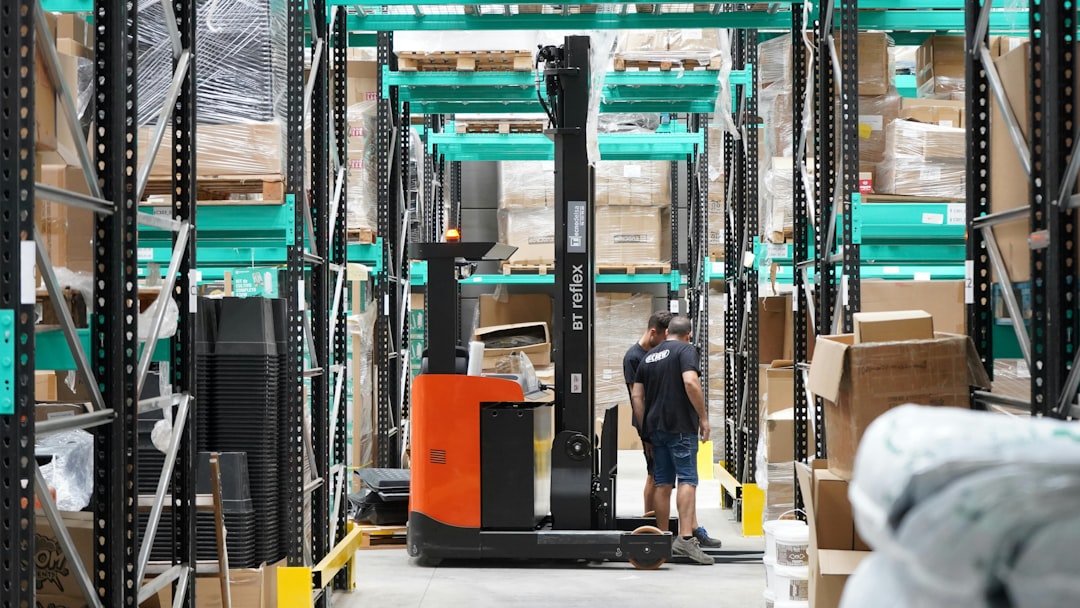
When a foreign company opens a logistics facility in Spanish territory, one of the first tax issues we must resolve is whether a warehouse in Spain generates a permanent establishment.
The answer could completely change the company's taxation in Spain. It's not enough to know that a warehouse or logistics center exists: we must analyze what activity is actually carried out there, what functions the staff performs, and, especially, what the applicable double taxation treaty stipulates.
At MGI Àmbit we specialize in international taxation and permanent establishments in Spain. From our Barcelona office, we advise foreign companies that want to operate in Spain and need to structure their logistics presence, avoiding tax contingencies arising from incorrect classification.
Quick answer: To determine whether a warehouse in Spain constitutes a permanent establishment, we must analyze Spanish regulations and, above all, the applicable double taxation treaty. A warehouse dedicated to truly preparatory or auxiliary functions may fall outside the definition of a permanent establishment under certain treaties. However, if the logistics center forms an essential part of the business, performs relevant commercial functions, or has personnel with sufficient capacity to participate in contracting, the risk of a permanent establishment increases considerably.
When does a warehouse in Spain create a permanent establishment?
Spanish domestic legislation uses a broad concept of permanent establishment.
Does your company use a warehouse in Spain and you're unsure if you're creating a permanent establishment? Our international tax experts will analyze your case and provide you with a clear, no-obligation answer.
The Non-Resident Income Tax Law considers that a company operates through a permanent establishment when it has facilities or places of work in Spain, on a continuous or habitual basis, in which it carries out all or part of its activity.
The warehouse is expressly mentioned in Spanish regulations
The law itself mentions warehouses among the places that may constitute a permanent establishment.
Therefore, from the perspective of internal regulations, there is a particularly relevant starting point for any foreign company with logistics facilities in Spain.
The double taxation agreement may change the analysis
Before concluding that a warehouse in Spain creates a permanent establishment, we must check if there is a double taxation agreement between Spain and the country of residence of the company.
The agreements may limit Spanish taxing power and establish specific exceptions for certain storage, display, delivery or preparatory and auxiliary functions.
Furthermore, the wording is not identical in all agreements.
What does it mean for the warehouse to have a preparatory or auxiliary activity?
This is one of the most important issues in international taxation.
Many agreements provide for exceptions for certain facilities used exclusively for limited activities.
Storage without relevant business functions
A center intended exclusively for the safekeeping of goods may present a lower risk when the activity is of a preparatory or auxiliary nature in accordance with the applicable convention.
The importance of the warehouse within the business
We must ask ourselves whether logistics activity is merely supportive or whether it constitutes an essential part of the business model.
In a company whose business depends directly on receiving, preparing and delivering merchandise quickly to the end customer, this activity can be of much greater importance than in a company that uses Spain only as a temporary transit point.
We cannot apply an automatic rule
It is not correct to state that storing merchandise never generates EP.
Nor can we say that any warehouse generates it.
To determine whether a warehouse in Spain generates a permanent establishment, we must analyze the specific agreement and the real economic function of the facility.
Ecommerce warehouses and fulfillment centers
E-commerce models require special attention.
A fulfillment center can do much more than store products.
Activities that increase the risk of permanent establishment
We need to check if functions such as the following are performed in Spain:
- Order preparation and dispatch.
- Returns management.
- Personalization or relabeling.
- Quality control.
- Direct customer management.
- Inventory decisions.
- Commercial functions.
The more important the warehouse is to fulfilling the business's value proposition, the more difficult it can be to argue that we are only dealing with an auxiliary activity.
The volume of activity is not the only criterion
A small warehouse can perform essential functions, while a large one can have a much more limited role.
That's why at MGI Àmbit we carry out a functional analysis of the permanent establishment and we don't limit ourselves to the physical size of the facility.
Permanent establishment by personnel or agent in Spain
Tax risk does not depend solely on the property.
We also need to study who works in Spain and what roles they perform.
Personnel with purely logistical functions
Operators dedicated solely to receiving, storing or shipping may have a different profile than employees with commercial responsibilities.
Personnel who negotiate or are involved in contracts
If we have workers or representatives who routinely conclude contracts, or if the applicable agreement also contemplates situations in which a person plays the main role leading to its conclusion, we must analyze the possible existence of a permanent establishment per agent.
Therefore, to check if a warehouse in Spain generates a permanent establishment, we review both the physical space and the actual functions of the people linked to the Spanish operation.
BEPS and the anti-fragmentation clause
International reforms promoted by the OECD have toughened the analysis of structures that artificially divide different business functions.
It is not enough to simply separate activities between several companies
In certain agreements modified by the BEPS measures, an anti-fragmentation clause may apply.
Its objective is to prevent complementary activities that are part of a cohesive economic operation from being analyzed in isolation to argue that each one is only preparatory or auxiliary.
We need to check the specific agreement
Not all Spanish agreements have exactly the same wording nor have they been modified in the same way by the Multilateral Instrument.
At MGI Àmbit we check the text of the applicable agreement and its possible modifications before reaching a conclusion.
Does using a 3PL logistics operator avoid permanent establishment?
Hiring an independent logistics operator can reduce certain risks, but it does not automatically eliminate any possibility of EP (Emergency Profit).
We need to analyze warehouse availability
An important question is to determine whether the foreign company actually has the space as its own place of business or whether it is only receiving a logistics service provided independently.
We also analyzed the operator's independence
We need to check:
- What functions does it perform?.
- What autonomy does it have?.
- If you represent the foreign company.
- If you participate in recruitment.
- If you provide services to other clients.
Using a 3PL can be a suitable structure, but it must be studied in light of the contractual and operational reality.
Does creating a Spanish subsidiary eliminate the risk of a permanent establishment?
Not necessarily.
Avoid penalties and tax liabilities before it's too late. At MGI Àmbit we review your business structure in Spain to determine if you have any outstanding tax obligations.
A Spanish subsidiary is a legally independent entity and can provide a clear structure for developing local business.
However, the mere existence of a subsidiary does not prevent the foreign company from also having a permanent establishment if the corresponding requirements are met.
The structure must match reality
We must clearly define:
- What functions does the subsidiary perform?.
- What risks does he assume?.
- Who contracts with the clients.
- Who controls the warehouse?.
- Where the decisions are made.
This is precisely one of the areas where specialized advice on international taxation is most important.
What obligations arise if a permanent establishment exists?
If we conclude that a warehouse in Spain generates a permanent establishment, we must correctly configure its taxation from the beginning.
Income Tax for Non-Residents with a Permanent Establishment
The permanent establishment is taxed in Spain on the income attributable to it.
Its taxable base is determined, with the corresponding specializations, using the rules of Corporate Income Tax.
The general applicable rate is currently 25%, without prejudice to the special cases provided for by the regulations.
Model 200 and document 206
Permanent establishments submit the declaration using the same form 200 used by corporate income tax payers, identifying themselves as a permanent establishment and using form 206 as the payment or refund document.
Separate accounting
There is an obligation to keep separate accounts of the operations carried out by the permanent establishment.
Installment payments and withholdings
There may also be obligations for installment payments, withholdings and payments on account.
Warehouse as a permanent establishment for VAT purposes
This point is especially important.
The existence of a permanent establishment for the purposes of Non-Resident Income Tax does not automatically mean that there is a permanent establishment or fixed establishment for the purposes of VAT.
VAT has its own rules
We must analyze separately:
- Where the operations are carried out.
- Who imports the merchandise?.
- Existence of intra-community acquisitions.
- Domestic sales.
- Available human and technical resources.
That is why we avoid using a conclusion on direct taxation to automatically resolve the treatment of VAT.
How we analyze a warehouse in Spain at MGI Àmbit
To correctly determine whether a warehouse in Spain generates a permanent establishment, we perform a specific analysis of the international structure.
1. We reviewed the double taxation agreement
We checked the definition of permanent establishment, the applicable exceptions, and any modifications introduced by international instruments.
2. We analyze the functions of the warehouse
We study what actually happens inside the facility and what importance it has within the value chain.
3. We review the staff and their powers
We analyze who works in Spain, what decisions they make, and whether there is commercial or contractual intervention.
4. We study the flow of goods and invoicing
We need to understand who sells, who invoices, who maintains the inventory, and how the product reaches the customer.
5. We document the tax conclusion
If we argue that the activity is preparatory or auxiliary, we recommend that the operational reality and business documentation be consistent with that position.
MGI Àmbit: specialists in permanent establishments and international taxation
At MGI Àmbit we specialize in advising international companies that develop or want to develop activity in Spain.
The analysis of permanent establishments requires combining Spanish regulations, double taxation agreements and the economic reality of each business model.
When we study whether a warehouse in Spain generates a permanent establishment, we do not apply a generic answer.
We analyze the specific structure to answer questions such as:
- Can the warehouse be considered a fixed place of business?
- Is the activity truly auxiliary?
- Does the agreement protect certain logistical functions?
- Are there staff with sales responsibilities?
- Can an anti-fragmentation clause operate?
- What obligations would we have if there is an EP?
This preliminary analysis allows decisions to be made before installing the structure, and not when there is already an inspection or regularization process underway.
Conclusion: The warehouse must be analyzed before operations begin
Determining whether a warehouse in Spain creates a permanent establishment requires analyzing much more than the physical existence of a building.
We must study the double taxation agreement, the functions performed, the relevance of the warehouse within the business, and the people who operate from Spain.
A structure that initially had an auxiliary function can also change over time if we incorporate new activities, personnel, or responsibilities.
At MGI Àmbit we specialize in international taxation and permanent establishments and we help foreign companies to analyze their presence in Spain before taking on tax risks that could have been detected from the beginning.
Frequently asked questions about warehouses and permanent establishments in Spain
Every business situation is different, and the line between having a warehouse and having a permanent establishment can be finer than you think. Speak with one of our specialized lawyers and economists today.
Does a warehouse in Spain create a permanent establishment?+
It can be generated, but we must analyze the specific case. Spanish regulations expressly mention warehouses, while certain double taxation agreements establish exceptions for storage activities or preparatory or auxiliary functions. The conclusion depends on the actual activity and the applicable agreement.
Is storing and delivering goods always exempt from generating EP (Expense Expense)?+
No. The wording of the agreements varies, and in many cases we must analyze whether the activity truly retains a preparatory or auxiliary character. Furthermore, the modifications resulting from BEPS may affect the analysis in certain agreements.
Can an e-commerce warehouse be considered a permanent establishment?+
Yes, there can be risk when the fulfillment center performs essential functions within the business. We must examine order preparation, returns, inventory, staffing, sales functions, and the importance of Spanish logistics within the value chain.
Does using a 3PL logistics operator eliminate the need for a permanent establishment?+
We cannot guarantee this simply by hiring a 3PL. We must analyze whether the foreign company has the space, the operator's independence, the functions it performs, and whether it intervenes in any way in the company's hiring or representation.
What taxes does a permanent establishment in Spain pay?+
Income attributable to the permanent establishment is taxed under Non-Resident Income Tax, following, with certain specificities, the rules of Corporate Income Tax. The general rate is currently 25%. There are also accounting obligations, estimated tax payments, withholdings, and tax returns. VAT treatment must be analyzed separately.
How can MGI Àmbithelp us?+
At MGI Àmbit we specialize in international taxation. We analyze double taxation treaties, warehouse functions, personnel, contractual structure, and merchandise flows to determine the risk of permanent establishment and the tax obligations we must anticipate in Spain.
Do you have any questions about this topic?
Our team of expert advisors will help you resolve any issues related to our services.
Contact us now
A Àmbit Assessor, SL has 40 years dedicated to the tax, comptable and labor consultancy of the Pime.
Latest entries from MGI Àmbit
(see all)
Related